Preservation and alternatives
Ask why a full arch is proposed and what options exist to retain teeth.

Treatments
Discuss full-arch implant care in Mexico City, including alternatives, prosthesis options, stages and maintenance at Gloss Dent.

Your assessment
All-on-X describes an arch restoration supported by several implants; All-on-4 and All-on-6 refer to four or six supports. The number is chosen within an individual surgical and restorative plan.
Before considering extractions, discuss the options for teeth that remain. Your assessment should explain the proposed prosthesis, treatment sequence and cleaning and follow-up needs.
It depends on your case
For people who have already lost the teeth in one arch, or are going to lose them for valid reasons, implants greatly improve daily life compared with a denture. In studies, the difference between 4 and 6 implants is small. What matters most in the long run is the prosthesis: it needs maintenance and repairs over the years. It is not a treatment for removing teeth that can still be saved.
| If your assessment shows… | Usually considered… |
|---|---|
| You still have teeth that can be kept | Keep them: a systematic review cautions against extracting teeth with a good prognosis to do a full arch. |
| 4 or 6 implants? | At 5 years or more, 98.1% versus 97.5% survival: no meaningful difference. The number comes from your bone and the size of the arch. |
| Little bone in the back | Tilted implants at the back (the All-on-4 concept), which performed as well as straight ones. |
| Very little bone in the upper jaw | Extensive grafting or zygomatic implants (anchored in the cheekbone): less time until you have teeth, and more complications. It is a technique for experienced surgeons. |
| You want temporary teeth within 24 to 48 hours | It is possible if the implants are firm once placed; if not, you wait a few months. |
| No teeth in the lower jaw | An overdenture on 2 implants is the standard first choice; more than 2 implants did not improve what patients reported. |
| A fixed or a removable prosthesis on implants? | Both improve function compared with a denture. It is decided by the bone, the space, lip support, ease of cleaning and your preference. |
| Prosthesis material | All-acrylic prostheses fracture more; zirconia might reduce mechanical complications. |
General criteria from the clinical literature (sources below). They do not replace an assessment: your plan comes from the diagnosis of your own case.
Is it right for me?
What to discuss
Ask why a full arch is proposed and what options exist to retain teeth.
Clarify whether the restoration would be fixed or removable, the materials and access for cleaning.
Request a timetable that distinguishes temporary teeth, healing and the final prosthesis.
The process
And a plan with alternatives: an overdenture or a fixed prosthesis, and how many implants.
Only of the teeth that cannot be kept.
With grafts or zygomatic implants if needed.
When the implants are firm; if not, you wait.
The implants fuse with the bone.
In the material chosen in the plan.
Cleaning under the prosthesis, checkups, and the adjustments or repairs that are to be expected.
Common questions
At 3 years, studies report that 99% of implants and almost all prostheses were still in place; at 5 years or more, about 98%. There is little data at 10 years or more. “Still in place” is not “problem-free”: at 10 years, only 8.6% of full-arch fixed prostheses had not had a single complication.
Those of the prosthesis: chipping or fracture of the outer veneering layer (a third at 5 years and two-thirds at 10 in one review), screws that loosen or break, and bone loss around an implant. That is why maintenance is part of the treatment.
Often a fixed temporary prosthesis is placed within the first 48 hours, if the implants are firm. The final one is made once they integrate, months later.
In studies, both the fixed prosthesis and the overdenture on implants greatly improve chewing and satisfaction compared with a conventional denture.
The criteria and figures on this page come from these sources. They are averages from studies, not a promise for any individual case.
Discuss your dental health, goals and treatment options in Mexico City. Local and international patients are welcome.
Read our articles about veneers, implants, aligners and preparing for your visit.
Explore Gloss Dent guidesExplore treatments
 01
Explore a plan for shape, color and proportion, guided by an assessment.
View treatment 02
Compare composite and ceramic options, preparation and ongoing care.
View treatment 03
Clear, removable aligners with an individual plan and professional reviews.
View treatment 04
Discuss alignment, bite and a timetable based on your diagnosis.
View treatment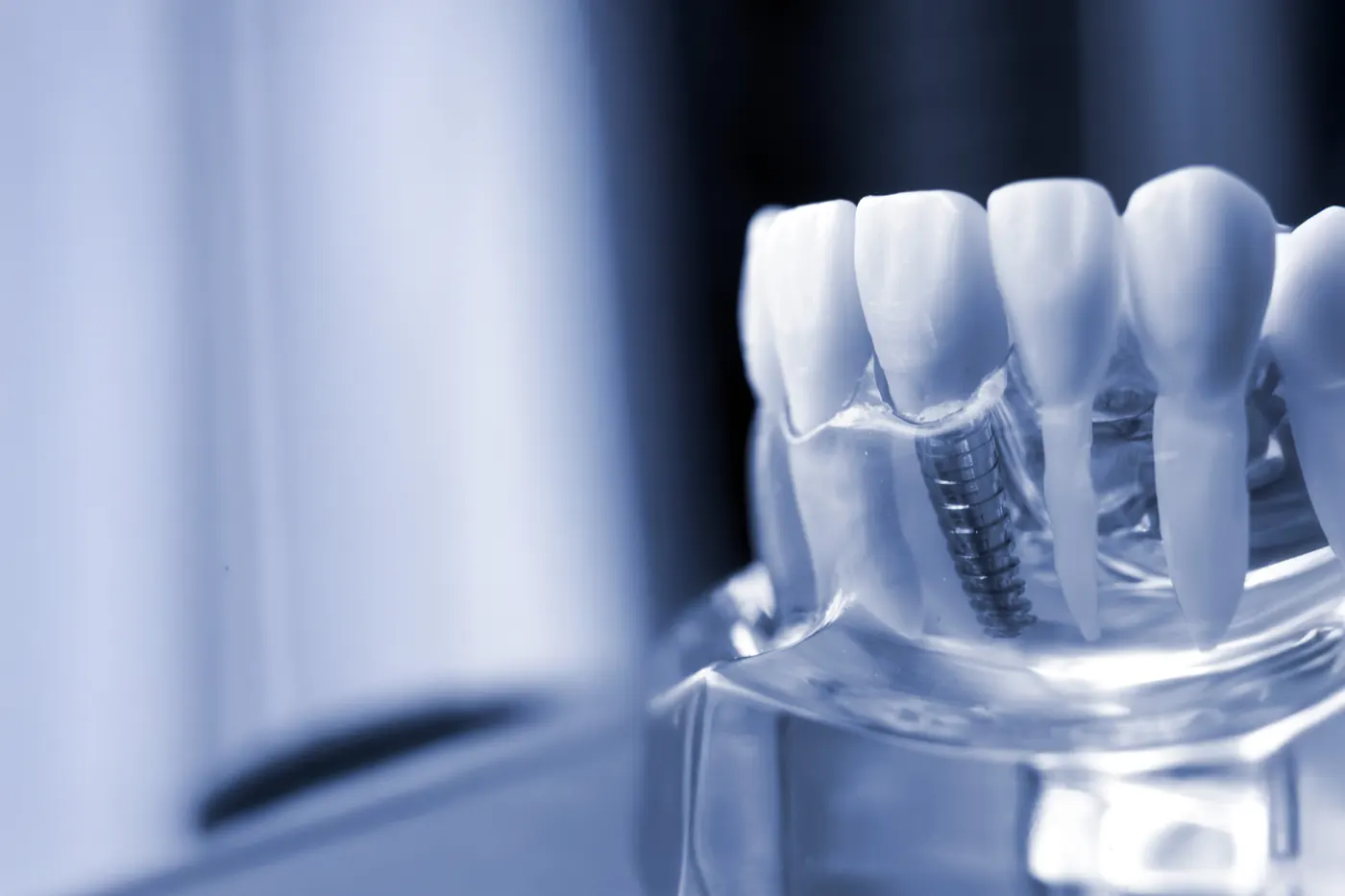 05
Review implant-supported restorations, treatment stages and maintenance.
View treatment 06
An assessment of root canal treatment to help retain a tooth.
View treatment07Explore full-arch implant care, prosthesis options and follow-up.
You are here